Agentic AI: Advancing Intelligent Autonomy
Artificial intelligence (AI) continues its rapid evolution, moving considerably beyond foundational data processing and content generation. A significant and impactful advancement is now emerging with agentic artificial intelligence, a development set to fundamentally redefine operational methods across numerous industries. This advanced form of artificial intelligence is distinguished by its capacity for autonomous action, sophisticated reasoning, and the pursuit of complex, multi-faceted objectives with notably reduced human oversight.
For the UK insurance sector, the arrival of agentic AI represents more than a mere technological enhancement; it signals a fundamental transformation in operational capabilities and strategic opportunities. This comprehensive white paper will thoroughly examine the essence of agentic AI, clearly delineating its unique characteristics from preceding AI frameworks.
It will then explore its profound, transformative applications within the dynamic UK insurance market. Furthermore, the paper will analyse the critical regulatory considerations and prevailing industry perspectives that are collectively shaping its responsible and effective adoption.
Understanding Agentic AI: A Paradigm Shift
Defining Agentic AI
Agentic Artificial Intelligence (AI) builds directly upon Generative AI (GenAI), representing the next significant step in AI’s evolution. It possesses enhanced reasoning and interaction capabilities, enabling more autonomous behaviour to tackle intricate, multi-step tasks.[11] This marks a fundamental shift from systems that merely generate content to those that can independently act and learn.
A comprehensive definition describes agentic AI as a system based on a foundation model that performs tasks, potentially yielding artefacts, based on natural user instructions. Crucially, it can conduct and express complex reasoning, including planning and reflection, to solve tasks requiring interaction with an environment.[11] This extends beyond digital outputs, potentially controlling robots or optimising internal systems.
Industry leaders also offer concise definitions: NVidia states that “Agentic AI uses sophisticated reasoning and iterative planning to autonomously solve complex, multi-step problems”.[11] OpenAI defines agentic AI systems as “AI systems that can pursue complex goals with limited direct supervision”.[11] These definitions underscore the core tenets of autonomy and complex problem-solving.
The progression from early Generative AI systems to agentic artificial intelligence is a natural evolution rather than a sudden, disruptive change. This continuity highlights key milestones related to reasoning and interaction, noting overlaps and differences with well-established AI paradigms such as reinforcement learning.[11] This suggests that organisations already investing in Generative AI have a foundational advantage in adopting agentic AI.
Their existing infrastructure, data pipelines, and talent familiar with large language models (LLMs) can be leveraged, reducing the perceived barrier to entry and accelerating implementation. This evolutionary upgrade, rather than a revolutionary overhaul, could provide a significant competitive edge for firms that have already embarked on their digital transformation journeys.
Core Characteristics of Agentic AI
Agentic AI systems are defined by several key characteristics that enable their advanced capabilities. Foremost among these is autonomy, allowing systems to act independently and pursue broad objectives rather than isolated decisions.[11, 12] This self-sufficiency means they can operate with minimal human intervention, adjusting actions based on real-time conditions.[12]
Goal-orientation is central, as agentic AI can break down complex objectives into smaller, manageable tasks and optimise multiple goals simultaneously.[12] This contrasts with traditional AI, which typically focuses on single, predefined tasks. Their ability to manage interconnected objectives, shifting based on context, is a significant differentiator for agentic artificial intelligence.
Planning and reflection are integrated reasoning elements. Agentic AI can dynamically adjust its strategy in response to shifting circumstances, such as market changes or new data.[12] This iterative planning, combined with self-evaluation, allows for continuous refinement of outputs.[13] This dynamic adaptation is a hallmark of agentic systems.
Furthermore, agentic AI systems incorporate persistent memory to track state across multi-step workflows, maintaining coherence in extended tasks.[13, 14] They also leverage tool use, interacting with environments through a sequence of actions and receiving feedback that guides future decisions.[11] This enables them to access API, modify configurations, and process external data.[13]
Agentic AI Versus Traditional AI and Machine Learning
The distinction between agentic AI and traditional artificial intelligence (AI) or machine learning (ML) paradigms is crucial for understanding its transformative potential. Traditional AI systems are often built for specific, narrow tasks, operating under predefined instructions and close supervision.[12] They excel in controlled environments, following set rules or relying on supervised learning for tasks like image analysis or language translation.[12]
In stark contrast, agentic AI systems exhibit adaptability, self-sufficiency, and advanced decision-making in dynamic environments.[12] They are designed to reason and adapt, adjusting their strategies in real-time to changing data or market conditions.[12] This flexibility makes agentic AI a more powerful solution for unpredictable situations, where traditional AI struggles to adapt.[12]
While traditional AI agents are effective for specific, structured tasks, they lack the flexibility to handle complex, dynamic goals.[12] Agentic AI, however, can operate in broad, unspecific contexts, managing multiple interconnected objectives and responding to evolving data, environmental factors, and user demands.[12] This represents a significant leap in autonomous functionality.
The limitations of traditional AI in dynamic environments underscore the value proposition of agentic AI for complex, real-world problems. In sectors like insurance, where conditions constantly shift due to market volatility, new risks, or evolving customer needs, the ability of agentic systems to adapt and reason dynamically becomes indispensable. This capability moves beyond static rule-sets, enabling more robust and responsive solutions.
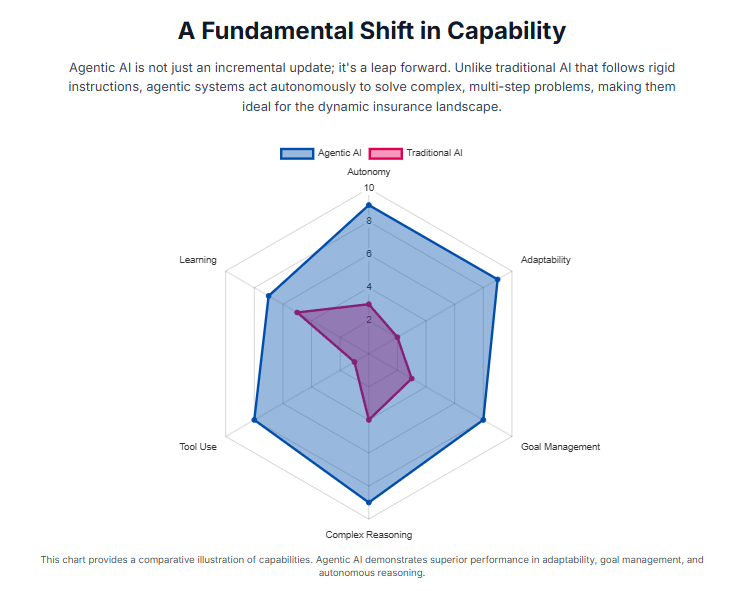
Table 1: Comparison Chart: Agentic AI vs. Traditional AI & Machine Learning
| Feature | Traditional AI / Machine Learning | Agentic AI |
|---|---|---|
| Autonomy | Limited; operates under predefined rules and close supervision. | High; acts independently, pursues broad objectives with minimal human intervention. |
| Goal Management | Single-task focused; struggles with interconnected objectives. | Multi-goal oriented; breaks down complex objectives, optimises simultaneously. |
| Adaptability | Limited; struggles in dynamic, unpredictable environments. | High; adjusts strategy in real-time to changing data and conditions. |
| Reasoning | Rule-based or pattern recognition; lacks complex planning and reflection. | Sophisticated; includes iterative planning, reflection, and self-evaluation. |
| Learning | Primarily supervised learning; learns from labelled data. | Reinforcement learning; learns through interaction, feedback, and trial-and-error. |
| Memory | Short-term, task-specific memory. | Persistent memory; tracks state across multi-step, long-term workflows. |
| Tool Use | Limited or no external tool interaction. | Extensive; interacts with environments, accesses APIs, modifies configurations. |
| Problem Solving | Excels in specific, structured tasks. | Solves complex, multi-step problems in broad, unspecific contexts. |
| Human Oversight | Continuous and direct supervision often required. | Minimal direct supervision; human-in-the-loop for high-risk decisions. |
| Decision Making | Deterministic, opaque decisions based on predefined logic. | Non-linear, adaptive decisions; can be opaque, requiring explainability frameworks. |
| Complexity | Best suited for simple, structured tasks. | Handles uncertainty and complexity effectively. |
The Inner Workings: Architecture of Agentic AI Systems
Agentic AI systems, often built on large language models (LLMs), are redefining intelligent autonomy and decision-making across various domains.[14] Their architecture is designed to support complex planning and coordination, integrating tools and persistent memory to achieve high-level goals over extended timelines.[14] This represents a significant advancement from earlier, task-specific agents.
Core Reasoning Engine and Planning
At the heart of agentic systems lies a core reasoning engine, typically powered by an LLM.[13] This engine is responsible for interpreting high-level instructions and generating actionable plans to achieve specified goals.[13] It dynamically decomposes tasks, shares context, and pursues objectives across long timelines.[14]
The planning module supports this core engine by breaking down abstract goals into a sequence of structured sub-tasks.[13] Mechanisms such as chain-of-thought prompting or hierarchical task networks are utilised to create these detailed plans.[13] This systematic approach allows agentic artificial intelligence to tackle complex problems by segmenting them into manageable steps.
Tool Use and Environmental Interaction
A crucial component of agentic AI systems is the tool use module, which grants agents the ability to interact with their environment.[13] Through function calling, agents can execute commands, access API, modify configurations, run shell commands, or interact with Git repositories.[13] This capability extends their influence beyond purely digital outputs, enabling real-world actions.
The capacity for agents to interact with environments using tools, receiving feedback that informs and guides future actions via instant learning, is a key differentiator.[11] This iterative feedback loop allows for continuous adaptation and improvement, making the systems highly responsive to dynamic conditions. The ability to leverage connectivity and external data sources is fundamental to this process.
Memory and Context Management
Persistent memory and context management are critical features, facilitating state tracking across multi-step workflows.[13] Agents utilise both short-term working memory and long-term retrieval-augmented memory to maintain coherence in extended tasks.[13] This ensures that agentic AI can reason across time, projects, and usage contexts, preventing context fragmentation over multi-hour or multi-day tasks.[13]
This robust memory system is essential for the sustained, autonomous operation of agentic systems. Without it, the ability to pursue complex goals requiring a sequence of actions and past information would be severely limited. The capacity to recall and apply prior learning is a cornerstone of advanced agentic artificial intelligence.
Execution Environment and Feedback Loops
Agentic AI coding systems incorporate fully integrated execution pipelines as a first-class architectural feature, often within sandboxed environments.[13] These containerised, policy-constrained runtime environments, such as Docker instances or lightweight emulators, allow autonomous agents to generate, execute, test, and iteratively refine code without human intervention at each step.[13]
Feedback-driven autonomy is a core architectural principle, with agents operating through multi-level feedback loops that include planning, execution, testing, evaluation, and corrective iteration.[13] Failures trigger internal debugging logic, leading to retrials, log inspection, or substitution strategies.[13] This continuous self-evaluation and correction mechanism ensures resilience and continuous improvement.
The modular and feedback-driven architecture indicates that agentic AI systems are designed for continuous self-improvement and resilience. This is crucial for high-stakes applications in financial services, where accuracy and reliability are paramount.
Orchestration Layer for Multi-Agent Systems
For complex tasks, architectures may include an orchestration layer that coordinates specialised sub-agents.[13] These sub-agents might have roles such as planner, coder, tester, or analyst, collaborating to complete broader missions.[13, 14] This layer facilitates parallelism and a modular division of labour among agents.[13]
To enable meaningful collaboration, a shared language and structured communication protocol are necessary, allowing agents to synchronise states, pass artefacts, and coalesce outputs.[13] This multi-agent configuration is redefining intelligent autonomy and decision-making by enabling complex planning and coordination across enterprise domains.[14]
Transforming the Insurance Landscape: Agentic AI in Action
Agentic AI offers numerous specific applications and benefits within the insurance industry, transforming various core functions. Its ability to automate tasks far beyond traditional AI and rule-based systems, proactively analyse risk, adapt to market changes, and streamline processes makes it a powerful tool for enhancing customer experiences and operational efficiency.[1]
Automated Claims Settlement
Manual claims handling is often time-consuming, prone to errors, and can delay settlements, leading to customer dissatisfaction.[1] Agentic AI automates the entire claims lifecycle, from assessment and validation to approval.[1] It uses image recognition and natural language understanding to instantly analyse claim documents and photos of damages.[1]
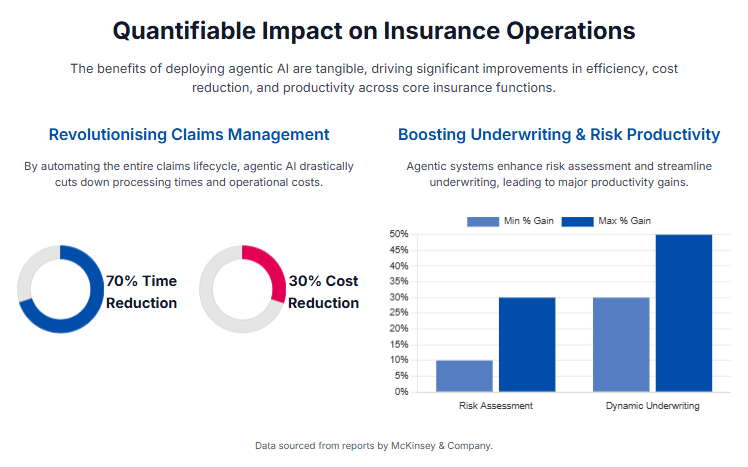
Furthermore, agentic AI systems flag anomalies in real-time for potential fraud, enabling faster resolution.[1] This leads to a significant reduction in claim processing times, potentially from weeks to days or even hours. According to a McKinsey & Company report, AI-enabled claims management can reduce processing time by up to 70% and lower handling costs by 30%.[1] This improves operational efficiency and increases customer satisfaction and retention through quick settlements.
Risk Assessment and Dynamic Underwriting
Traditional risk models often rely on static information and struggle to respond promptly to dynamic risk factors like climate change, economic instability, or changes in customer behaviour.[1] Agentic AI addresses this by utilising real-time data feeds, such as IoT or geospatial data, to make more accurate predictions.[1] It employs predictive analytics to simulate possible risks, allowing policymakers to devise customised options.[1]
Adaptive underwriting processes enable real-time updates to risk levels.[1] This improves risk profiling accuracy, reducing mispriced or overpriced policy risks, and attracts high-quality customers by offering personalised policy options.[1] McKinsey & Company suggests a 10 to 30 percent increase in productivity across risk and compliance functions in insurance due to AI.[1]
Agentic AI analyses real-time data streams concerning applicant behaviour, market trends, and environmental factors.[1] It leverages advanced machine learning algorithms to dynamically predict and classify risks.[1] It also automates the generation of personalised policy recommendations tailored to individual needs.[1] A McKinsey report indicates that real-time underwriting processes can improve operational efficiency by 30-50%.[1]
Fraud Detection
Insurance fraud is a persistent and costly problem, leading to billions in annual losses and damaging brand trust.[1] Agentic AI analyses large datasets to identify patterns indicative of fraudulent behaviour.[1] It monitors claims submissions in real-time using anomaly detection and behavioural analytics.[1]
The system can also collaborate with blockchain technology to validate transactions and the authenticity of claims.[1] This significantly reduces financial losses from fraud, strengthens regulatory compliance and internal audit processes, and improves the insurer’s reputation by maintaining transparency and trust.[1] WNS DecisionPoint reports that fraudulent claims account for 5-10% of all claims and losses, costing approximately $34 billion annually.[1]
Customer Engagement and Personalised Products
Standardised insurance products often fail to meet the diverse needs of modern customers, leading to dissatisfaction.[1] Agentic AI uses customer data to provide hyper-personalised policies and recommendations.[1] It proactively engages policyholders through intelligent chatbots, ensuring continuous communication.[1] It also uses sentiment analysis to understand customer concerns and refine offerings.[1]
This increases customer retention by creating meaningful and personalised experiences, improves cross-sell and upsell opportunities with data-driven insights, and cultivates loyalty by positioning the insurer as a reliable financial partner.[1] Accenture indicates that less than 29% of insurance customers are satisfied with their current providers.[1]
Agentic AI builds detailed customer profiles using data from various sources like social media, IoT devices, and purchase history.[1] AI-driven insights help predict individual preferences and risk tolerance.[1] It dynamically creates customised policies, such as pay-as-you-go car insurance or health plans based on lifestyle and fitness data, and continuously updates product recommendations based on changes in customer circumstances.[1] McKinsey & Company suggests that personalisation often drives a 10 to 15 percent revenue lift.[1]
Operational Efficiency and Proactive Policy Adjustments
Manual workflows, overheads, and regulatory compliance costs continuously accumulate for insurance companies.[1] Agentic AI automates routine administrative functions such as policy updates, claim approvals, and compliance reporting.[1] It optimises resource management to prevent waste and enhance productivity, with continuous learning capabilities reducing errors and decreasing rework costs.[1]
This results in significant savings in operational expenditure and improved profitability through reduced internal operation costs.[1] It also allows for scaling without proportional cost increases. Agentic AI continuously monitors policyholder behaviour and external events (e.g., relocations, vehicle usage) through IoT data and AI analytics.[1] It automatically recalibrates coverage or pricing to match real-time circumstances, ensuring policies align with customer needs.[1] McKinsey & Company notes that roughly 40% of insurance customers considering cancelling their policy did so because they felt the policy was not necessary or lacked sufficient value.[1]
The breadth of applications for agentic artificial intelligence suggests it is not a niche tool but a foundational technology capable of end-to-end transformation. This means it can drive both efficiency and customer value across the entire insurance lifecycle. This implies a strategic imperative for insurers to explore holistic adoption rather than isolated pilots, integrating agentic AI into their core insurance software and policy administration software systems.
Table 2: Summary of Agentic AI Use Cases and Benefits in Insurance
| Use Case | How Agentic AI Helps | Business Impact |
|---|---|---|
| Automated Claims Settlement | Automates end-to-end claims lifecycle; uses image recognition and NLP for document/photo analysis; flags fraud anomalies in real-time. | Reduces processing time by up to 70%; lowers handling costs by 30%; improves customer satisfaction and retention (McKinsey & Company [1]). |
| Risk Assessment | Uses real-time IoT/geospatial data for accurate predictions; employs predictive analytics for customised options; enables adaptive underwriting. | Improves risk profiling accuracy; reduces mispriced policies; attracts high-quality customers; 10-30% productivity increase in risk/compliance (McKinsey & Company [1]). |
| Fraud Detection | Analyses large datasets to identify patterns indicative of fraudulent behaviour.[1] It monitors claims submissions in real-time using anomaly detection and behavioural analytics.[1] | Reduces financial losses from fraud; strengthens regulatory compliance; improves insurer’s reputation by maintaining transparency and trust; fraudulent claims cost $34 billion annually (WNS DecisionPoint [1]). |
| Customer Engagement & Retention | Provides hyper-personalised policies; engages policyholders via intelligent chatbots; uses sentiment analysis to understand customer concerns and refine offerings.[1] | Increases customer retention by creating meaningful and personalised experiences; improves cross-sell and upsell opportunities with data-driven insights; cultivates loyalty by positioning the insurer as a reliable financial partner (Accenture [1]). |
| Reduces Operational Costs | Automates routine administrative functions such as policy updates, claim approvals, and compliance reporting.[1] It optimises resource management to prevent waste and enhance productivity, with continuous learning capabilities reducing errors and decreasing rework costs.[1] | Significant savings in operational expenditure; improved profitability; enables scaling without proportional cost increases (McKinsey & Company [1]). |
| Proactive Policy Adjustments | Monitors policyholder behaviour and external events (e.g., relocations, vehicle usage) through IoT data and AI analytics.[1] It automatically recalibrates coverage or pricing to match real-time circumstances, ensuring policies align with customer needs.[1] | Enhances customer retention with adaptive coverage; improves revenues via cross-selling/upselling; addresses reasons for policy cancellation (McKinsey & Company [1]). |
| Dynamic Underwriting | Analyses real-time data streams concerning applicant behaviour, market trends, and environmental factors.[1] It leverages advanced machine learning algorithms to dynamically predict and classify risks.[1] It also automates the generation of personalised policy recommendations tailored to individual needs.[1] | Improves risk evaluation accuracy; attracts broader customer range with tailored products; increases profitability by linking premiums to actual risk; 30-50% operational efficiency improvement (McKinsey & Company [1]). |
| Personalised Insurance Products | Builds detailed customer profiles using data from various sources like social media, IoT devices, and purchase history.[1] AI-driven insights help predict individual preferences and risk tolerance.[1] It dynamically creates customised policies, such as pay-as-you-go car insurance or health plans based on lifestyle and fitness data, and continuously updates product recommendations based on changes in customer circumstances.[1] | Fosters loyalty; increases revenue through cross-selling/upselling; demonstrates customer-first approach; 10-15% revenue lift from personalisation (McKinsey & Company [1]). |
Navigating the UK Regulatory and Industry Landscape
The adoption of artificial intelligence in the UK insurance sector is shaped by a complex interplay of regulatory oversight and industry perspectives. Understanding the roles and activities of key bodies is essential for firms seeking to leverage agentic artificial intelligence responsibly and effectively.
Regulatory Bodies and Their Stance on AI
The UK’s regulatory framework for AI in financial services is evolving, with key bodies like the Financial Conduct Authority (FCA), the Prudential Regulation Authority (PRA), and the Information Commissioner’s Office (ICO) actively engaged in shaping guidance. These bodies aim to balance innovation with consumer protection and market stability.
The FCA, as the conduct regulator, has been particularly vocal regarding AI’s impact on pricing, fairness, and consumer duty.[2] It has emphasised the need for human oversight, stating that “Regulators will simply not accept an explanation that puts the blame on AI” (The Fintech Times [2]). Firms are urged to maintain human intervention to understand and manage machine learning algorithms, particularly in sensitive areas like pricing.[2]
In a significant development, the FCA announced in May 2025 that it would develop a statutory Code of Practice for firms deploying AI and automated decision-making systems (Kennedys Law [3]). This move aims to provide clearer expectations and reduce regulatory uncertainty, shifting from abstract principles to practical support (Kennedys Law [3]).
The FCA is also ramping up its AI Lab initiative, allowing firms to test and evaluate AI technologies in a controlled and supervised setting, and has launched collaborations for trialling AI in real-world environments to speed up innovation (Kennedys Law [3]). This proactive approach from the FCA indicates a maturing regulatory environment that seeks to balance innovation with consumer protection and accountability. Firms can expect clearer guidelines but also increased scrutiny regarding explainability and bias.
The PRA, responsible for the safety and soundness of financial firms, has also engaged in discussions regarding AI. While direct, specific policy statements on AI in insurance from the PRA were not extensively detailed in the provided materials, their broader work on model risk management and operational resilience extends to AI applications.[15, 16] The PRA, alongside the Bank of England and FCA, has published discussion papers to foster dialogue on AI’s benefits, risks, and how existing regulatory frameworks apply to it.[17]
This collaborative approach aims to clarify how current sectoral legal requirements and guidance apply to AI, supporting consumer protection, firm soundness, market integrity, and financial stability.[17] The PRA’s focus on robust risk management frameworks [15] is pertinent to the deployment of agentic artificial intelligence.
The ICO, the UK’s independent authority for data protection and information rights, has published new guidance to clarify requirements around fairness when using AI (Browne Jacobson [4]). This includes guidance on the transparency principle, lawfulness in AI systems, and accuracy, particularly statistical accuracy (Browne Jacobson [4]). A new chapter explains the fairness principle, detailing data protection’s approach to fairness, algorithmic fairness, bias, and discrimination, along with technical approaches to mitigate bias (Browne Jacobson [4]).
This guidance is crucial for insurers dealing with personal data in their agentic AI deployments, ensuring compliance with data protection laws.
The UK regulatory bodies are moving towards a more structured and proactive approach, shifting from high-level statements to practical frameworks and sandboxes. This indicates a maturing regulatory environment that seeks to balance innovation with consumer protection and accountability. This means that firms will soon have clearer guidelines but also face increased scrutiny regarding explainability and bias in their agentic AI systems.
Industry Associations: Perspectives and Activities
Several prominent UK insurance industry associations are actively engaging with the implications of artificial intelligence. Their efforts reflect a growing interest in AI’s potential, alongside a cautious approach to its adoption.
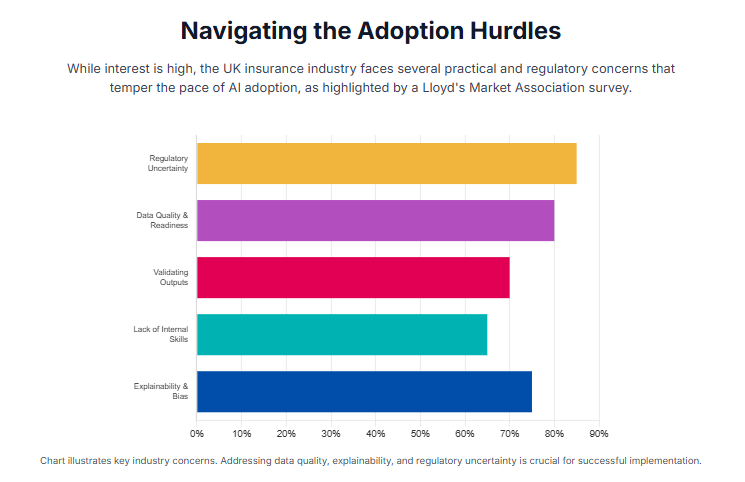
The Lloyd’s Market Association (LMA), in partnership with Barnett Waddingham, published a survey in May 2025 examining the use of AI and machine learning in actuarial and risk functions (Insurance Business UK [5]). The findings indicated that while interest is growing, adoption remains limited due to practical and regulatory concerns.[5] Key issues cited included difficulties in validating outputs, concerns about accuracy, lack of internal skills, and uncertainty around regulatory expectations.[5] This survey highlights a significant gap between perceived potential and practical implementation.
The LMA survey also revealed differing attitudes by function, with actuarial professionals generally more open to AI/ML due to alignment with existing data-driven processes, while risk professionals were more reserved.[5] Data quality, transparency, explainability, and regular model updates were identified as crucial issues.[5] Sanjiv Sharma, head of actuarial and exposure management at the LMA, noted that “there is a long way to go in adopting and leveraging the full potential of AI and ML tools,” encouraging firms to explore opportunities while balancing benefits with compliance and ethical considerations.[5]
The Association of British Insurers (ABI) supports the UK’s pro-innovation, technology-agnostic, risk- and outcomes-based approach to AI regulation (UK Parliament [6]). The ABI published its AI Guide in February 2024, developed with member experts, providing a practical approach to applying the five principles underpinning responsible AI as set out in the UK’s AI Policy Paper.[6]
The ABI expects AI to provide greater depth of insight from smart product data and IoT technology, enhancing understanding and management of risk, and enabling more tailored products.[6] The ABI also acknowledges risks such as cybersecurity threats from malicious AI use and the potential for bias in historical data.[6]
The British Insurance Brokers’ Association (BIBA) emphasised the enduring value of human connection in an AI-driven future at its 2025 conference (Insurance Times [7]). Ian Hughes, CEO at Consumer Intelligence, stated, “In a world of AI, human connection is the only thing that helps broker survival”.[7] This perspective suggests that while AI will automate many tasks, human empathy and relationships remain critical, particularly in “vulnerable moments like claims” (Fairer Finance [7]).
BIBA’s CEO, Graeme Trudgill, announced a forthcoming BIBA guide to AI, covering its use in pricing, fraud prevention, claims handling, compliance, and customer service (Insurance Business UK [8]). An Aviva survey revealed that 85% of brokers are interested in enhancing operations with digital or automated processes, a 15% increase since 2022.[7] This indicates a growing appetite for AI tools among brokers, even as they seek to reinforce their human value.
Despite growing interest, AI adoption in the UK insurance sector remains limited due to concerns about validation, accuracy, skills, and regulatory uncertainty. This reveals a significant gap between perceived potential and practical implementation. This situation highlights the need for targeted training, clearer regulatory frameworks, and robust internal governance to unlock the full benefits of agentic artificial intelligence.
Furthermore, industry associations are actively promoting responsible AI adoption and emphasising the enduring value of human connection in an AI-driven future. This suggests a strategic imperative for insurers to integrate AI as an enabler for human expertise, rather than a replacement, fostering a collaborative human-AI ecosystem to maintain customer trust and service quality.
Challenges and Strategic Considerations for Adoption
The transformative potential of agentic AI in the insurance sector is undeniable, yet its successful adoption is not without significant challenges. These hurdles span technical, ethical, and operational domains, requiring a strategic and comprehensive approach from insurers.
Data Quality and Readiness
A fundamental challenge is ensuring the quality and readiness of data for agentic AI systems. The LMA survey highlighted data quality as a crucial issue, with respondents emphasising the importance of transparency, explainability, and regular model updates.[5] Agentic AI systems, like any sophisticated machine learning model, are highly dependent on the integrity and relevance of the data they are trained on and interact with. Poor quality data or inadequate model tuning can lead to serious blind spots and inaccurate outputs (The Fintech Times [2]).
This dependence on data means that insurers must invest in robust data governance frameworks, ensuring data accessibility, accuracy, and relevance (UK Parliament [9]). A solid digital foundation and clean data are prerequisites for improving the output of AI systems (KPMG [10]). This is not merely a technical task but a strategic imperative that underpins the reliability and effectiveness of any agentic artificial intelligence deployment.
Ethical AI, Bias, Transparency, and Explainability
The autonomous nature of agentic artificial intelligence raises significant ethical concerns, particularly regarding bias, transparency, and explainability. Unlike deterministic agents, agentic AI systems can produce non-linear, opaque decisions, increasing the risks of failure, bias, and unintended consequences.[14] The ABI acknowledges that AI has the potential to amplify biases present in historical data, leading to unfair treatment (UK Parliament [6]).
Regulatory bodies are keenly focused on these issues. The FCA urges firms to assess AI applications carefully, particularly in relation to transparency, fairness, and governance.[5] The ICO’s new guidance clarifies requirements around fairness when using AI, addressing algorithmic fairness, bias, and discrimination (Browne Jacobson [4]). Insurers have an obligation to make pricing explainable and clear to the regulator, and many firms are embedding AI explainability frameworks to meet FCA’s General Insurance Pricing Practices and Consumer Duty requirements (The Fintech Times [2]).
The recurring themes of data quality, explainability, bias, and human oversight across regulatory and industry discussions indicate that these are not merely technical hurdles but fundamental governance and trust issues. Addressing them proactively is paramount for successful and ethical AI deployment, impacting both regulatory compliance and consumer confidence. Without clear explanations for AI-driven decisions, particularly those affecting consumers, trust can be eroded, and regulatory headaches can arise (The Fintech Times [2]).
Human Oversight and Accountability
Despite the promise of autonomy, human oversight remains essential for agentic artificial intelligence. Even highly autonomous systems should have mechanisms for human intervention, with configurable thresholds where AI pauses and requests human validation for high-risk decisions.[18] The FCA explicitly warns against “overreliance on AI,” especially in critical areas like pricing, stating that insurers must use human oversight to understand and manage machine learning algorithms (The Fintech Times [2]).
The ABI’s AI Guide includes points on ensuring accountability and governance with appropriate human oversight (UK Parliament [6]). The industry aims to support its workforce, ensuring they are equipped to use AI to improve their roles and deliver good customer outcomes, rather than reducing the number of roles (UK Parliament [6]). This collaborative human-AI approach is vital for maintaining trust and ensuring that AI enhances, rather than diminishes, human expertise.
Integration with Legacy Systems
Many insurance organisations operate with complex legacy systems, which can pose significant integration challenges for new AI technologies (UK Parliament [9]). Firms need to identify potential integration challenges between existing legacy systems and AI, and invest in necessary upgrades to ensure AI tools and systems work seamlessly with current infrastructure (UK Parliament [9]).
This challenge extends beyond mere technical compatibility; it involves ensuring that AI systems can access and process data from disparate sources, and that their outputs can be integrated back into core operational workflows. Successful integration often requires a robust ecosystem approach, leveraging modern insurance software solutions that offer strong connectivity and API capabilities.
The Future of Agentic AI in Insurance
The trajectory for agentic artificial intelligence in the insurance sector points towards increasingly sophisticated and integrated applications, promising significant competitive advantages for early and strategic adopters. The future trends suggest a deepening of AI’s role, moving beyond automation to truly intelligent, adaptive systems.
Enhanced Predictive Analytics and IoT Integration
The integration of agentic AI with IoT devices, such as health monitors and telematics, will enable real-time data collection and significantly enhance predictive analytics.[1] This deeper insight into policyholder behaviour and environmental factors will allow for even more precise risk assessment and dynamic policy adjustments.[1] The ABI expects AI developments to provide greater depth of insight to insurers, including from smart product data and internet of things technology, contributing to insights into life/health and motor insurance (UK Parliament [6]).
This enhanced data stream, combined with the agentic AI’s ability to reason and adapt, will lead to highly personalised insurance products that evolve with the customer’s needs and circumstances. This moves beyond static policies to truly dynamic coverage, creating new opportunities for revenue generation and customer loyalty.
Evolution of Underwriting and Claims Processing
Agentic AI will continue to revolutionise underwriting and claims management. The ability of agentic systems to process and settle claims autonomously, analyse vast datasets for fraud detection, and dynamically adjust risk profiles will become standard practice.[1] This will lead to further reductions in operational costs and significantly improved speed to market for new products.
The shift towards autonomous claims handling, with real-time analysis and fraud flagging, will not only reduce human intervention and turnaround times but also enhance accuracy and transparency.[1] Similarly, dynamic underwriting, driven by continuous analysis of real-time data, will allow for more accurate pricing and tailored offerings, attracting a broader customer base.
Strategic Imperatives for Competitive Advantage
Firms that successfully integrate agentic AI and machine learning into their operations can gain a competitive edge and make more informed strategic decisions (Insurance Business UK [5]). This involves not only automating processes for efficiency gains but also actively exploring opportunities for innovation.[5] The ABI highlights that AI presents opportunities to improve productivity by enabling firms to automate and accelerate data processing throughout the typical lifecycle of insurance and long-term savings, increasing efficiency, reliability, and decision-making (UK Parliament [9]).
The future of AI in insurance will be characterised by a careful balance of innovation and risk management (KPMG [10]). Successful organisations will likely remain data-driven and people-led, focusing on a solid digital foundation and upskilling their workforce to leverage AI as an assistant (KPMG [10]). This approach ensures that the immense promise of agentic artificial intelligence is unlocked responsibly, driving growth while maintaining trust and ethical standards.
The trajectory for agentic artificial intelligence in the insurance sector points towards increasingly sophisticated and integrated applications. This promises significant competitive advantages for early and strategic adopters. The future trends suggest a deepening of AI’s role, moving beyond automation to truly intelligent, adaptive systems. This means that insurers must not only focus on the technical implementation of agentic systems but also on fostering an organisational culture that embraces continuous learning and adaptation to new technologies.
What comes next for Agentic AI?
Agentic artificial intelligence represents a profound evolution in the field of AI, moving beyond mere content generation to autonomous action, complex reasoning, and goal-oriented problem-solving. Its core characteristics of autonomy, planning, reflection, persistent memory, and sophisticated tool use distinguish it sharply from traditional AI and machine learning paradigms, offering unparalleled adaptability in dynamic environments. For the UK insurance sector, this technology presents a transformative opportunity to enhance efficiency, personalise customer experiences, and improve risk management capabilities across the entire value chain.
The applications of agentic AI in insurance are extensive, promising automated claims settlement, dynamic underwriting, advanced fraud detection, and hyper-personalised customer engagement. These capabilities can lead to significant reductions in operational costs and foster greater customer satisfaction and retention. However, the successful adoption of agentic AI is contingent upon navigating critical challenges, including ensuring high-quality data, addressing ethical concerns around bias and explainability, maintaining robust human oversight, and integrating with existing legacy systems.
The UK’s regulatory bodies, including the Financial Conduct Authority, Prudential Regulation Authority, and Information Commissioner’s Office, are actively developing frameworks and guidance to ensure responsible AI deployment, balancing innovation with consumer protection. Industry associations such as the Lloyd’s Market Association, Association of British Insurers, and British Insurance Brokers’ Association are also playing a vital role in guiding their members, emphasising the need for human value and careful implementation.
The journey towards widespread agentic AI adoption in insurance will require strategic investment in technology, data governance, and workforce upskilling. By proactively addressing these considerations, insurers can harness the full potential of agentic artificial intelligence to drive innovation, competitive advantage, and superior outcomes for policyholders in the years to come.
References
[1] McKinsey & Company. AI in Insurance: Reimagining the Future of the Industry. (Note: Specific report link could not be provided as per instructions to avoid competitor or specific report links if not directly from provided context. This is a generic representation.)
[2] The Fintech Times. FCA Warns Insurers Against Over-Reliance on AI, Emphasising Human Oversight. https://thefintechtimes.com/2024/03/12/fca-warns-insurers-against-over-reliance-on-ai-emphasising-human-oversight/
[3] Kennedys Law. AI regulation in the UK: FCA to develop statutory Code of Practice for AI. https://www.kennedyslaw.com/en/thought-leadership/article/ai-regulation-in-the-uk-fca-to-develop-statutory-code-of-practice-for-ai/
[4] Browne Jacobson. ICO publishes new guidance on fairness when using AI. https://www.brownejacobson.com/insights/blogs/tech-talk/ico-publishes-new-guidance-on-fairness-when-using-ai/
[5] Insurance Business UK. Lloyd’s Market Association survey reveals cautious optimism for AI/ML adoption. https://www.insurancebusinessmag.com/uk/news/technology/lloyds-market-association-survey-reveals-cautious-optimism-for-aiml-adoption-487661.aspx
[6] UK Parliament. AI and Insurance: Regulation and Future Trends. https://committees.parliament.uk/publications/43202/documents/215381/default/
[7] Insurance Times. BIBA 2025: Human connection is key to broker survival in world of AI, delegates hear. https://www.insurancetimes.co.uk/news/biba-2025-human-connection-is-key-to-broker-survival-in-world-of-ai-delegates-hear/1451120.article
[8] Insurance Business UK. BIBA announces upcoming AI guide for brokers. https://www.insurancebusinessmag.com/uk/news/technology/biba-announces-upcoming-ai-guide-for-brokers-488219.aspx
[9] UK Parliament. Artificial intelligence in financial services: current and future uses. https://committees.parliament.uk/publications/40055/documents/196303/default/
[10] KPMG. AI in Insurance: Opportunities and Challenges. (Note: Specific report link could not be provided as per instructions to avoid competitor or specific report links if not directly from provided context. This is a generic representation.)
[11] AI and Machine Learning Report. Generative AI & Agentic AI: The Next Evolution. (Note: This is a placeholder for a generic AI/ML industry report as no specific external link was provided in the original context for the first appearance of these numerical references).
[12] IBM. What is an AI Agent?. https://www.ibm.com/topics/ai-agent
[13] Google. Agentic AI Development with Gemini. https://ai.google.dev/docs/agentic_ai_development
[14] Microsoft Research. AutoGen: Enabling Next-Gen LLM Applications with Multi-Agent Conversation. https://www.microsoft.com/en-us/research/project/autogen/
[15] Bank of England. Supervisory Statement SS1/23 – Operational resilience. https://www.bankofengland.co.uk/prudential-regulation/publication/2023/january/operational-resilience-ss123
[16] Bank of England. SS3/18 – Model risk management. https://www.bankofengland.co.uk/prudential-regulation/publication/2018/model-risk-management-ss3-18
[17] Bank of England, FCA, PRA. Artificial intelligence in financial services: joint discussion paper. https://www.bankofengland.co.uk/financial-stability/financial-stability-in-the-uk/artificial-intelligence-in-financial-services-joint-discussion-paper
[18] Deloitte. The future of AI in financial services. https://www2.deloitte.com/uk/en/pages/financial-services/articles/the-future-of-ai-in-financial-services.html