The Importance of a Modern Insurance Policy Administration Systems (PAS)
The modern Policy Administration System (PAS) has evolved far beyond enabling the management of basic administrative tasks. Powerful, cloud-based, API-driven software solutions now offer the opportunity to automate complex processes, open up new product innovation opportunities and enable entirely new customer journeys. A great PAS enables insurance businesses to be agile like never before. And with that, comes great opportunity.
So, what lies behind modern policy administration, and why does it matter to the modern insurer?
Defining the PAS
‘Insurance admin software.’ ‘End-to-end insurance solution.’ ‘Core platform’…
As the insurance landscape has evolved, so has the language we use to define the technology required to run an insurance business. The most common is still the PAS, or Policy Administration System, though in reality, much like using the term ‘phone’ to describe the powerful computer in your pocket, the ‘PAS’ acronym is nowadays far from an accurate description of the solutions it refers to.
Whilst managing policies – and all the customer data and documentation that go with them – is still an absolute pre-requisite for a modern PAS, the evolution of technology and the insurance landscape has resulted in full end-to-end insurance management solutions being bundled into the ‘policy admin’ category. In reality, from enabling multi-channel digital quote and bind journeys to automated claims management, the modern PAS increasingly forms the operational backbone of a modern insurance business.
‘All-in-one’ or ‘all together’?
One of the biggest questions within any modern insurance business lies around how focused the tech stack should be. Is it better to have one, or just a few, main software solutions to enable the end-to-end insurance journey? Or is a more complex tech stack preferable, one that enables a business to tap into a whole suite of specialist solutions for different needs?
There’s clearly no overall right or wrong answer in this debate. Instead, it’s a decision to be made following consideration around business requirements and resources, which will determine where it sits on the scale between the two options. A smaller MGA, with limited in-house technical capacity, may want a single all-in-one solution that handles everything, from product building and digital distribution to underwriting, policy and claims management. A larger or more complex carrier may have the capacity and requirements to choose separate, specialist solutions for each.
But whatever the needs, the PAS is increasingly likely to be the core solution that brings everything together. Even if there are a multitude of software solutions in play, the PAS, which will provide the main system of record for customer policies, will be the glue between them all. An easy-to-use modern PAS, with well organised data and the ability to connect to other systems smoothly through high-quality open APIs, is absolutely critical to enable the smooth operations of the business.
As the technology landscape evolves at ever-increasing speed, a strong core PAS solution will be the crucial platform needed to enable modern insurers to keep pace with changing customer needs. Whatever the innovations – from wider digital distribution channels to advanced analytics for underwriting and fully automated claims journeys – everything has to connect smoothly and quickly to well-organised customer and policy data. It’s never been more vital to make sure that the underlying core platform is in place form which to enable innovation and change, whatever the future brings.
Policy administration…and beyond
Today’s modern PAS solutions make it increasingly easy to store, manage and update policy information for any business user according to their requirements. How that information is organised is key to how efficiently the solution will be used, so as a pre-requisite, it should already be fully customer-centric. This will make it easy to find and manage all information related to any single customer. A strong PAS solution will enable teams to handle basic policy tasks – such as endorsements, mid-term adjustments and renewals – in just a few clicks, enabling automation of general business processes and workflows to reduce manual admin.
PAS software solutions also increasingly offer in-built product building tools for the insurance industry, with the leading solutions providing simple no-code product and rules configuration. This enables business users to create new products and offer new solutions to customers at speed, without the need for deep technical knowledge.
When a PAS is described as an ‘end-to-end’ solution, this means that it should offer all the basic elements to get a product to market, and manage it from quote to renewal, including claims. So, this is likely to encompass digital distribution (at least enabling the products created to be deployed online, on websites and apps), a robust quote-and-bind journey, document management, secure data storage, billing and claims management.
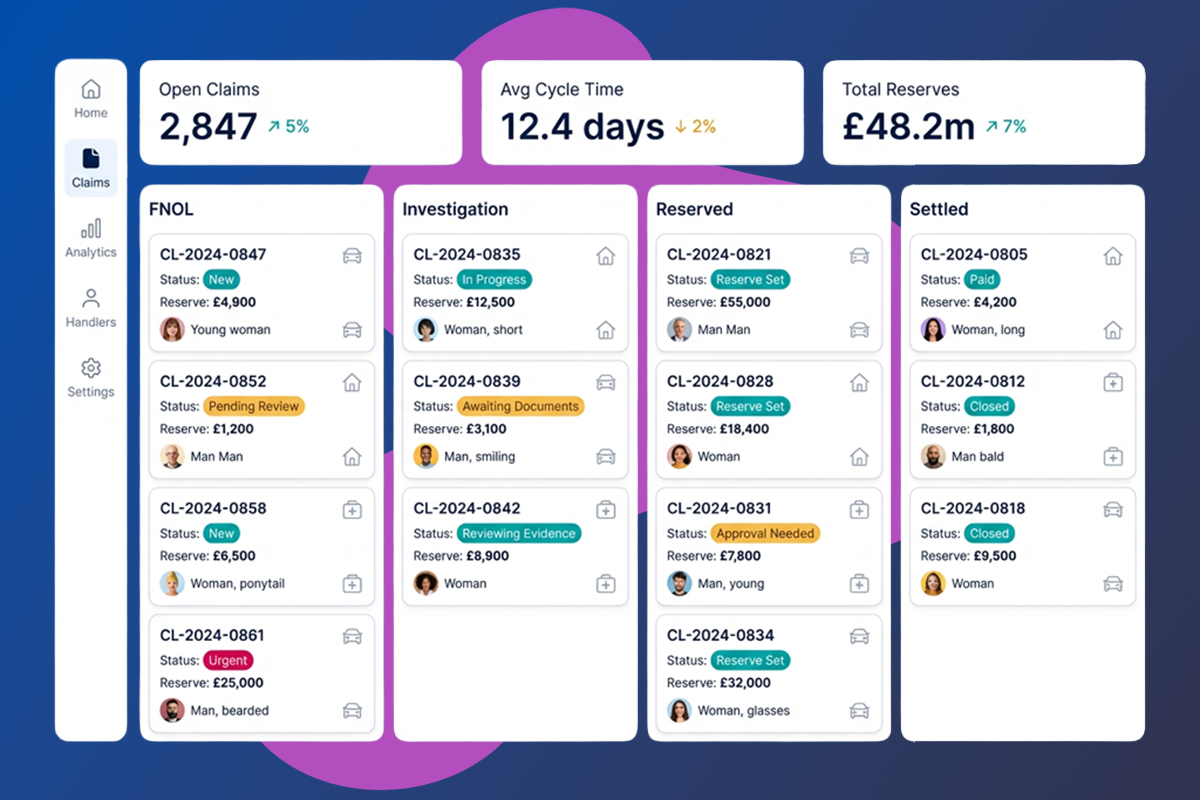
All of this must be wrapped in a modern user interface – a frequent complaint with older technology. The importance of the user experience in PAS platforms cannot be overstated. A user-friendly interface for both insurers and the end-customer facilitates better engagement, efficiency and satisfaction. For insurers, an intuitive PAS interface simplifies policy management, claims processing and customer service operations, leading to increased productivity and reduced training times for staff.
Beyond these crucial features for managing an end-to-end insurance journey, truly modern PAS now offer an increasingly wide range of solutions to enable insurance businesses to take their offerings to the next level. Through in-built solutions, or collaboration with integrated third party software via APIs, there are a wealth of new innovations now being offered via the PAS, such as:
- Deep business insights. Modern PAS platforms are leveraging advanced data analytics to provide deeper insights into customer behaviour, risk profiles and market trends. This capability enables insurers to make more informed decisions, tailor products and services to individual customer needs, and identify opportunities for growth and optimisation. An insurance business cannot truly thrive without the data required to power it’s decision making.
- Enhanced customer experiences. From advanced user-friendly interfaces and customer portals, to integration with native apps and embedded insurance across third party channels, modern PAS solutions can streamline the application and claims processes, enable instant access to policy information and help businesses offer additional customer services – enhancing overall customer satisfaction and engagement. With customers expecting more than ever, it is those providing truly exceptional customer service that are thriving.
- AI-driven automation. AI offers the opportunity to revolutionise the insurance value-chain by automating complex processes, such as underwriting and claims processing. All of this can be enabled and managed via the modern PAS as the core platform to connect advanced technology to policies and customer data. AI algorithms can quickly analyse vast amounts of data to assess risks, detect fraud and make accurate policy recommendations. This automation increases efficiency and reduces errors or biases in decision-making processes and the reduced manual processes return humans to high value tasks, optimising operational efficiency.
- The battle with ‘legacy tech’. The insurance industry has grappled with numerous challenges associated with PAS, stemming primarily from reliance on ‘legacy systems’ – a term used to describe the solutions built on outdated technology. Insurance companies have long struggle to operate on such platforms, with innovation stifled and multiple lines of business and insurance products never seeing the light of day due to their limitations.
Older legacy systems are often characterised by poor data management solutions, clunky user interfaces and a reliance on manual processes that hinder operational efficiency. Perhaps most importantly, integration challenges further compound these issues, as insurance businesses seek to create a cohesive technology ecosystem but without modern API-led connectivity.
So, why is much of the insurance industry still battling with such outdated technology, and failing to replace with more modern architecture?
The answer to that question partly lies in the history of building those systems. Insurance businesses can be complex beasts, with technology architecture built on layer upon layer of previous solutions and services over the course of many years – with business structure changes, new products, mergers and acquisitions all adding to ta complex web of technology and data.
However, with easy-to-deploy cloud-based PAS solutions available, it’s never been easier to migrate from the old to the new. Often, it’s the idea of complexity (often fueled by the oversell of complex ‘digital transformation programme’ requirements to CTOs with perceived deep pockets) that drive this nervousness and feat of change.
Whatever the reason, it’s clear that those who commit to truly modern PAS solutions, utilising cloud-software to create truly digital customer experiences and the ability to react to customer needs fast, will have a genuine competitive advantage over those left behind.