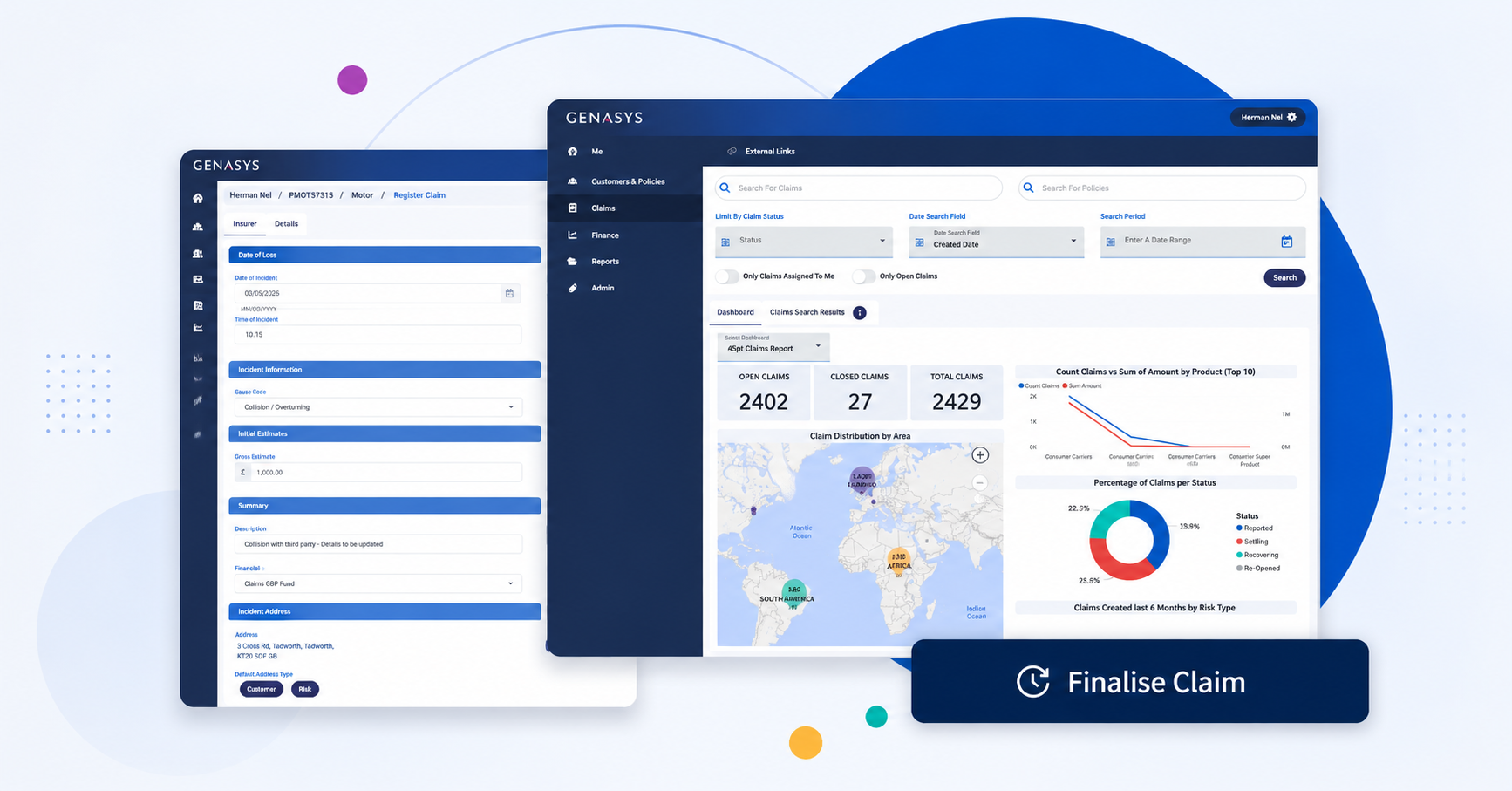
In an insurance industry where the stakes are high and the paperwork is higher, standing out among the top insurance software providers takes more than flashy technology. It’s about building a culture of excellence through innovation, adaptability and an obsession with delighting customers.
What exactly sets the best apart from the rest? These seven essential traits separate genuine market leaders from pretenders, backed by data and expert perspective.

Nobody gets excited about buying insurance. That’s why top insurance software providers make it their mission to create solutions that actually make life easier for insurers, brokers, MGAs and their customers.
It’s about allowing humans to focus on high-value tasks over petty administration. Let technology do the heavy lifting so your team and their customers can focus on the things that only humans can tackle.
According to PwC, 70% of insurers rank improving customer experience as their top strategic priority. “It’s no longer about what insurers want to sell, it’s about what customers want to buy,” notes Paul Clark, a digital transformation consultant.
Anticipating user needs means the best providers don’t just respond to requests. From intuitive self-service platforms to real-time policy updates, they make navigating insurance smoother and more satisfying for everyone involved. They anticipate how both users and customers will want to use their service and adapt accordingly.
2. Cloud-Native Technology: The Foundation of Modern Insurance
Outdated, on-premise systems are no longer fit for purpose in the modern world. Top insurance software providers have fully embraced cloud-native technology, which offers scalability, flexibility and resilience – all vital components to modern insurance business.
A study by Deloitte found that 83% of insurers view cloud technology as critical to their digital transformation efforts. This isn’t surprising given the operational advantages.
Cloud platforms deliver competitive speed. They allow insurers to roll out new features quickly and efficiently, reducing operational costs and improving adaptability in a highly competitive market. Additionally, cloud technology supports remote working environments where physical offices and on-premise servers are no longer viable or desirable.
SaaS insurance platforms built on cloud infrastructure enable continuous innovation without disruptive system upgrades. This architectural choice fundamentally changes how quickly insurers can respond to market conditions.
3. AI-Powered Underwriting: Smarter Decisions, Faster Results
Artificial Intelligence is no longer just a buzzword – it’s revolutionising underwriting, claims processing and fraud detection. By analysing vast datasets and identifying patterns, AI empowers insurers to make more informed decisions faster.
According to Capgemini, insurers using AI for claims processing have seen a 20-30% reduction in fraud and significantly faster payouts. This transforms what would have been unmanageable amounts of data into hugely valuable assets.
“AI isn’t here to replace humans, it’s here to make them better at what they do,” says Sarah Walker, a technology expert. Whether it’s streamlining claims or refining risk assessment, AI helps insurers improve efficiency and deliver better outcomes for their customers.
Augmenting human capability is the real value proposition here. This isn’t about replacing humans or laying off the workforce. It’s about augmenting their abilities, helping them do more faster and returning them to high-value tasks that will actually shift the dial for their employers.
Modern underwriting software incorporates AI-driven risk assessment that processes applications in seconds rather than days. The competitive advantage is immediate and measurable.
4. Cybersecurity: No Room for Compromise
As insurers digitise, protecting sensitive data is more important than ever. Cyber attacks are increasing at a troubling rate of frequency. Top insurance software providers prioritise cybersecurity with robust measures that safeguard both data and trust.
The UK Government’s Cyber Security Breaches Survey 2023 found that 39% of businesses experienced a cyberattack in the past year. For insurance firms handling sensitive personal and financial data, this threat is existential.
Bank-grade security is now the baseline expectation. From real-time threat detection to advanced encryption, leading insurance software providers offering strong cybersecurity measures ensure insurance businesses can operate without fear of breaches or compliance risks.
The fines for regulatory non-compliance following a data breach could be catastrophic. Therefore, security can’t be an afterthought – it must be foundational to the platform architecture.
5. Seamless Integration: Plug It, Play It, Love It
Insurance ecosystems are like a finely tuned orchestra – every system needs to work together harmoniously. Top insurance software providers excel at offering open, API-based architectures that integrate smoothly with other platforms at pace.
A report by MuleSoft found that 84% of insurers consider API-based integration essential to improving operational efficiency. This capability allows insurers to adopt new technologies quickly, whether it’s a customer portal, claims management system or analytics dashboard.
Futureproofing through connectivity means better integration enables insurers to consume third-party data, services and technology. This ensures continuously improving, incremental technological advancement within their business without ripping out and replacing core systems.
API connectivity transforms insurance platforms from isolated systems into orchestration hubs that coordinate data flow across the entire business ecosystem. Legacy providers without this capability force insurers into vendor lock-in that strangles innovation.
6. A People-First Culture: Talented Teams Win Every Time
Behind every innovative platform is a team of skilled professionals. At Genasys, we often talk about how great technology only tells one part of the story. Top insurance software providers focus on attracting and retaining the very best, high-agency talent.
Additionally, they foster a culture of continuous learning, development and succession. According to LinkedIn’s Workforce Learning Report, 94% of employees would stay longer at a company that invests in their career development.
“Great software is the result of great teams. Investing in talent is not just good sense – it’s essential for staying ahead,” says James Owen, a technology leader. This commitment to talent ensures that the brightest minds are behind the best solutions.
Removing obstacles matters as much as hiring talent. Senior management’s role is to clear the path for talented teams to execute brilliantly. When insurance software providers build cultures that empower people rather than constrain them, innovation accelerates naturally.
7. Strategic Partnerships: Collaboration is Key
Top insurance software providers don’t just deliver solutions – they work hand-in-hand with insurers, regulators and other stakeholders to create genuine and long-lasting value. They understand that by engaging additional and often external stakeholders, they only serve to enrich their own offering.
A PwC study found that 67% of insurers see partnerships with technology providers as critical to their long-term growth. This collaborative approach doubles down on customer success.
Co-creating solutions means these providers foster collaboration that helps insurers innovate faster, adapt to change and better serve their customers. The relationship becomes strategic partnership rather than vendor-client transaction.
Therefore, leading insurance software providers invest in understanding their clients’ businesses deeply. They attend industry events, participate in regulatory consultations and build expertise that extends far beyond software development.

Why Excellence Matters
These seven traits form the foundation of how the best insurance software providers operate. They separate vendors who simply sell software from partners who genuinely understand insurance operations.
Technology alone solves nothing. The providers who combine robust platforms with deep industry knowledge, talented teams and genuine partnership approaches are the ones helping insurers actually transform their businesses. They’ve moved beyond marketing promises to demonstrated results.
In an industry facing unprecedented change – regulatory pressure, customer expectations, competitive threats – choosing the right insurance software provider becomes a strategic decision that compounds over time. Digital transformation in insurance demands partners who’ve proven they can execute across all seven of these dimensions.
The insurers winning today partnered with providers who had these traits years ago. The question is whether you’re making that same choice now or waiting until your competitors have already pulled ahead.