Insurtech Partnerships & Success
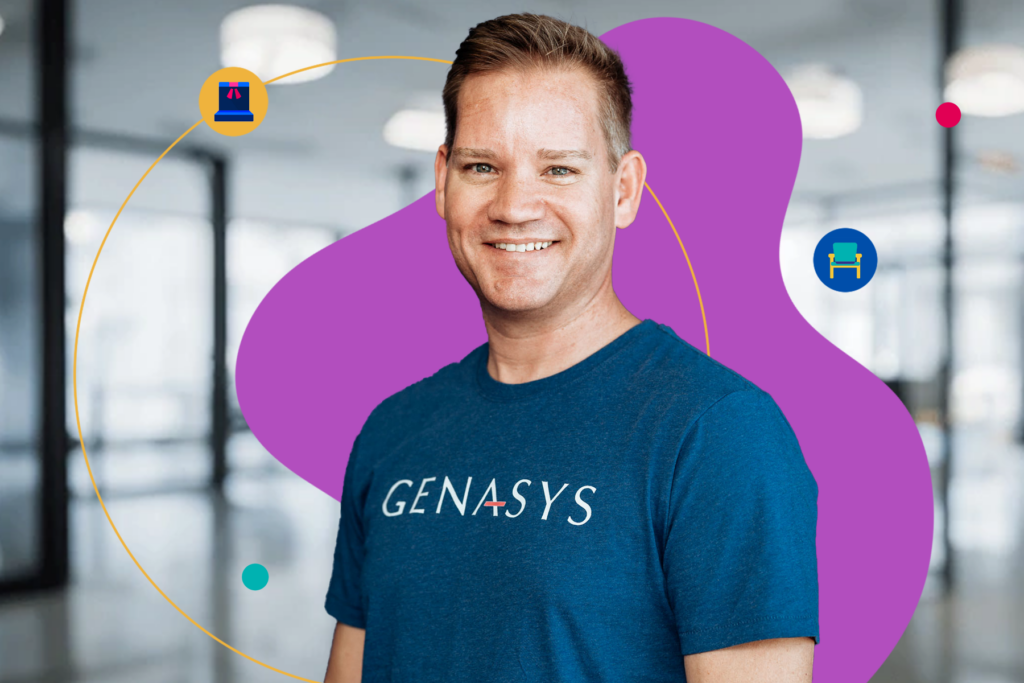
At ITC DIA Europe 2024 in Amsterdam, Milliman hosted an insightful panel titled “Foundations to Innovation: Smart Ways of Structuring Your Insurance Business and Partnering for Success.” The session brought together industry leaders to discuss how InsurTech companies can leverage innovative business structures and strategic partnerships to drive success in the competitive insurance landscape. Among the expert panelists was Craig Olivier, Group CTO of Genasys, who shared his deep expertise on building scalable platforms and fostering impactful collaborations.
The discussion centred on how Insurtechs can navigate the complexities of scaling their operations while maintaining focus on core strengths. Craig Olivier emphasised the importance of clarity and specialisation, stating, “Minimising complexity comes down to choosing the right partners and sticking to what you do well.” The panel explored how partnerships can supercharge innovation, with Olivier highlighting how Genasys helped a client develop and launch a pandemic insurance product within just ten days.
The conversation also delved into the role of emerging technologies in Insurtech, particularly artificial intelligence (AI). Olivier shared his vision for the future, explaining, “AI will undoubtedly change the industry, but it’s essential to use it for the right reasons—enhancing decision-making rather than replacing it.”
Other speakers echoed the theme of partnership, with key insights on aligning interests, building trust, and adapting to market needs. The panel concluded with a shared belief that successful Insurtech businesses will combine cutting-edge technology with deep insurance expertise, creating solutions that resonate across the value chain.
Watch and Read More
Want to dive deeper into these powerful insights? Watch the full video of the panel discussion and read the transcript below to explore how Craig Olivier and other industry leaders are reshaping the future of Insurtech.
Full Transcript
[Music and Applause]
Moderator (Charlotte):
Hello, everyone. How are we doing? Nearly the end of the first day. I hope you’ve all had as good a day as me. It’s great to feel the energy here. This event—I’ve always said, despite going through more events than I can imagine over the last decade—this event is always my favourite, so it’s great to be here again.
Welcome to the Milliman panel. I’m really proud to present on a topic that I think is really important at the moment for this second generation of insurtech: Foundations for Insurance Innovation and Smart Ways of Structuring Your Business and Partnering for Success.
We started thinking about a quote from Churchill: “We shape our buildings, and thereafter, they shape us.” What does this mean? This means that sometimes the way that we structure our businesses either helps or hinders innovation.
Now, my background—if you don’t know me—I’m a senior consultant at Milliman who leads insurtech in the UK now, but I’ve spent the last 15 years building insurtechs. I was most recently at Many Pets as their Chief Underwriting Officer. Before that, I was building a household product and indeed won one of these diamonds about seven years ago. And before that, I was on the founding team of a telematics company.
Three roles, three successes—all because of great partnerships. It’s never come alone. And I’ve noticed that, in this second generation of insurtech, really smart foundations have been the difference between success and failure.
That being said, when I thought about writing about this, my favourite way to learn about these is through case studies. So, I pulled together four of my favourite people—people who have built four brilliant businesses—and I thought I’d let them tell their stories, rather than me trying to do that second-hand.
So, I’m going to have a few minutes with all of them, where they can tell you about their businesses and their thoughts. Then we’ll have a discussion afterward.
Speaker 1: Katherine Barton (Key Insurance)
Moderator (Charlotte):
Let’s start with Katherine Barton from Key. Please tell us all about yourself and your business.
Katherine Barton:
Thank you, Charlotte. Hello, everyone. My name is Katherine Barton, and I’m a Commercial Director at Key Insurance, which is the first algorithmically driven follow-capacity insurance business in Lloyd’s of London.
We launched in 2021, so we’re just in year four now. Our vision was to empower brokers to be able to access follow capacity much more quickly—basically at the touch of a button. What we created was a platform that enabled them to get quotes within seconds for each line of business that we chose to write.
We did that for three years before then expanding to offer additional capacity through three insurer partners.
Moderator (Charlotte):
Fantastic. Key, if you don’t know it, is a brilliant example of insurtech that’s really flying at the moment in a very different line of business. So, how do you think innovation is superpowered—or hindered—by how you decided to structure the business at Key?
Katherine Barton:
I think the structuring point is really important. If I go back to the very beginning, Key was the brainchild of Brit’s then CEO and CFO. The CFO is now the CEO of Key. They had this idea that there was an opportunity in the follow market, and they decided to set up that business as an independent business.
They got external capacity—external funding, I should say—to support that, from Blackstone as well as from Brit’s parent company, Fairfax. That meant there was financial independence.
It meant that, first of all, we were able to go and write £400 million of premium in our first year of underwriting, which was incredible because we’d raised £500 million of backing capital.
Moderator (Charlotte):
Sorry, just to repeat that number again—how much did you write in the first year?
Katherine Barton:
Over £400 million.
Moderator (Charlotte):
So, this is how you get to real scale: great partnerships.
Katherine Barton:
Exactly. That £500 million fundraise was absolutely instrumental. It also meant that we were able—with our team internally—to focus on the bits that really, really mattered. For example, getting approval from Lloyd’s, making sure we had the right underwriting disciplines in place, and setting up our technology and algorithms.
In turn, we were able to spend some of the money we’d raised to work with Google Cloud to set up the platform and with UCL to create the initial iterations of our algorithm.
The relationship with Brit was also critical because it meant we didn’t have to do everything ourselves. Through a service agreement, we were able to leverage their finance, actuarial, risk, IT, and HR capabilities.
That allowed us to have a focused team at Key, doing what Key needed to do, while Brit provided support with their expertise.
Moderator (Charlotte):
I mean, that’s an incredible ecosystem. And that word focus—I think it’s going to keep coming back. How important was trust when you were building all of that?
Katherine Barton:
Trust was mega, mega important, as always. I think the area where trust became even more important was as we evolved our business model to work with external partners.
We’ve needed to demonstrate to Aspen, Travelers, and Beazley—to name a few—how our portfolios are written, how our algorithms work, and how our platform operates. At the same time, we needed to ensure that all partners involved understood what they were bringing to the relationship and how it benefited everyone.
Without that foundation of trust, things wouldn’t work as smoothly as they do today.
Speaker 2: Craig Olivier (Genasys)Moderator (Charlotte):
Passing over to Craig Olivier from Genasys. Craig, can you introduce yourself and tell us about your brilliant business?Craig Olivier:
Good afternoon, everyone, and thanks, Charlotte. My name is Craig Olivier, and I’m the co-founder and COO at Genasys Technologies.Genasys provides a fully end-to-end policy administration platform. It’s fully cloud-based, modular, and designed to be flexible and scalable. Our focus is on delivering value to customers in a highly agile manner. We’re API-first, enabling the creation of ecosystems of partners that can plug in across the insurance value chain.
Moderator (Charlotte):
So, it’s fair to say Genasys is an incredible foundation upon which many insurtechs have built. How important do you think it is to stick to your expertise as you grow? There’s often pressure on growing businesses to expand into other areas—how do you balance this?Craig Olivier:
That’s a great question. From Genasys’ perspective, we’ve stayed focused on what we do well—core backend insurance management. Instead of diversifying too broadly, we create ecosystems of likeminded partners that offer complementary value to our customers.For example, one of our customers—a large UK mutual in the medical space—was dealing with a challenge where claims approvals required significant human involvement. Working with us, they now have 80% of claims automatically approved through fraud detection and image recognition technology. Our next goal is to bring that figure up to 95%.Another example is a customer who innovated during the pandemic. They developed a new product, “Pandemic Shield,” and launched it within 10 days—from ideation to deployment—using Genasys’ platform.
Moderator (Charlotte):
That’s incredible efficiency. Sticking to what you’re good at clearly pays off. How do you ensure you minimise complexity as you grow?Craig Olivier:
Minimising complexity comes down to choosing the right partners. It’s about understanding their maturity and technological capability, and ensuring seamless integration.Equally important is having clarity on what you do well. We focus on being the best at what we do while enabling others to contribute their expertise.
Speaker 3: Dena Murit (Artificial)Moderator (Charlotte):
On to our third speaker—Dena, please introduce yourself and your really interesting business.Dena Murit:
Hello, everyone. I’m Dena Murit, the COO of Artificial. We provide a suite of technology products designed for the algorithmic underwriting space. Partnerships are at the heart of what we do, and that’s why I’m here today.
Moderator (Charlotte):
How do these great partnerships help deliver different solutions?Dena Murit:
We work across the industry with partnerships that span multiple areas. For example, we have collaborations with PPL in the marketplace, Apollo in the underwriting space, and Lockton for broking.Innovation in these partnerships is driven by people, not just technology. We’ve worked hard to build embedded teams within each partnership, ensuring multiple touchpoints. It’s not just about project manager-to-project manager communication but engineer-to-engineer collaboration as well.Apollo, for instance, often tells us that we “develop at hyper speed,” which we take as a massive compliment. But the effectiveness of these partnerships really stems from the relationships we’ve built.
Moderator (Charlotte):
That’s fascinating. So, despite being a highly innovative company in the London market, you’re saying it’s really all about the relationships?Dena Murit:
Exactly. Relationships are what drive true innovation.
Moderator (Charlotte):
And how about alignment of interests? How do you ensure that?Dena Murit:
Our partnerships became significantly more effective when we introduced a solutions engineering role. This involved embedding someone with Apollo’s underwriters to truly understand their processes.At Artificial, we say: “People first, process second, technology third.” Embedding this role made a huge difference. Additionally, our CEO, David King, presented at Apollo’s all-hands meeting to align the entire organisation on our shared vision.Trust is vital in all of this. With embedded teams and high-frequency communication, it becomes safe to innovate together.
Moderator (Charlotte):
That’s a powerful point. Without trust, there’s no safe space for innovation. Thank you, Dena.
Speaker 4: Harry (NN Insurance)Moderator (Charlotte):
And finally, over to our Chief Commercial Officer on the stage—Harry. Please introduce yourself and your great business.Harry:
Thank you very much. My name is Harry, and I’m the Chief Broker and Partnership Lead at NN Insurance. I work across our nine business lines in the market, focusing on aligning the interests of brokers with ours, and vice versa.We also do this on the customer side, ensuring strategies align effectively. All the points mentioned earlier—trust, alignment, and people—are critical.
Moderator (Charlotte):
How have you seen great partnerships lend different solutions in the innovation space?Harry:
In the business area of brokers, which is a major focus for us in Holland, the speed of innovation varies significantly between brokers and insurers. Insurers tend to have a broader view of innovation and technology, while brokers are often smaller, with fewer resources, but they operate at a faster pace.For example, when collaborating with major brokers—such as Gallagher or Aon—they often find innovation and new business opportunities interesting, but the pace at which we, as an insurer, develop APIs or create smoother integrations often depends on the broker’s capabilities and technology maturity.Aligning these strategies through meetings and ensuring mutual understanding is crucial. Without this alignment, both teams might work on similar goals but at different speeds, leading to mismatched outcomes.
I will now proceed with the panel discussion and predictions from the participants, maintaining the same word-for-word fidelity.
Panel Discussion: What Makes a Partnership Greater Than the Sum of Its Parts?Moderator (Charlotte):
We’ve heard some great insights so far, and there are some clear themes emerging. I’d love to hear from each of you about what makes a partnership greater than the sum of its parts. Katherine, let’s start with you.
Katherine Barton (Key Insurance):
I think it’s about finding areas where you couldn’t achieve success on your own. For example, at Key, brokers wanted diversity in the capacity we offered. While we could have raised more capacity independently, delivering diversity required us to bring in external partners like Aspen, Travelers, and Beazley.These partnerships worked because we brought something to the table that our partners valued—insight into digital follow markets at Lloyd’s. Meanwhile, they provided the capacity and broader potential to work together on future opportunities.But to make a partnership truly successful, you need alignment of interest at every level—from the grassroots, where many ideas originate, right up to senior leadership. Without that buy-in, even the most promising initiatives can stall.
Moderator (Charlotte):
Craig, how about you? What makes a partnership greater than the sum of its parts?
Craig Olivier (Genasys):
For me, it’s about culture and clarity. At Genasys, we’ve created a culture of adaptability, where change management flows seamlessly from leadership through to technology teams.It’s also crucial to use the right technology for the right objectives. Too often, businesses get caught up in hype. Take blockchain, for example—there was a time when everyone wanted to use it, regardless of whether it fit their needs.Successful partnerships are built around clear goals, choosing the right tools, and making measurable progress together.
Moderator (Charlotte):
Dena, would you like to add to this?
Dena Murit (Artificial):
I’d like to emphasise the importance of playing to your strengths. Effective partnerships are like great teams—when everyone brings their unique value, the outcome is far greater than the input.It’s also about shared momentum. Being part of a collaboration that builds momentum feels like you’re on a shared mission. That’s where the real magic happens—when everyone is aligned on creating meaningful change.And then there’s the practical side. Partnerships allow you to combine resources for greater market coverage, shared marketing, and amplifying your message.
Moderator (Charlotte):
Harry, anything to add?
Harry (NN Insurance):
I’ll offer a slightly different perspective. Commitment is key—both parties need to be fully invested. Without that, partnerships can’t succeed.I also think partnerships need to be viewed as journeys. Sometimes, as you work through a project, unexpected opportunities arise. For example, an innovator in Holland once told me that they moved from A to B, but along the way, they discovered C—which ended up being the real success. Partnerships need that openness to evolve over time.
Moderator (Charlotte):
Do you think it’s possible to succeed in every phase of a partnership, or is it more about the long-term vision?
Harry (NN Insurance):
It’s important to be pragmatic. If something isn’t working, it’s better to stop and reassess. But when priorities align, and both parties commit the necessary time and resources, partnerships can thrive in the long term.
Moderator (Charlotte):
That’s such a powerful insight. Now, before we wrap up, I’d love to hear quick predictions from each of you about the future of insurance innovation.
Katherine Barton (Key Insurance):
I think the companies that will succeed are those that combine brilliant technology with deep insurance expertise. It’s not enough to innovate—you also need a solid foundation to ensure profitability and regulatory compliance.
Craig Olivier (Genasys):
AI will undoubtedly change the industry. At Genasys, we’re already seeing significant efficiency gains with co-pilot tools and automated code generation. The key is to use AI in a way that enhances decision-making, rather than replacing it.
Dena Murit (Artificial):
More partnerships! Smaller insurtechs are eager to prove their value to larger partners, and their success often depends on it. This creates a high-stakes environment that drives innovation. Also, APIs will continue to proliferate, enabling even more connectivity.
Harry (NN Insurance):
The value chain will become more connected. AI and other technologies will play a role, but we must not overestimate their impact. At the end of the day, we’re social creatures, and the human element will always matter.
Moderator (Charlotte):
Wow—thank you all so much. This has been such an inspiring discussion. The themes of trust, alignment, and communication really stand out.If you’d like to hear more, come and talk to us at Milliman. Thank you![Applause]