AI insurance distribution just stopped being theoretical.
On 9 February 2026, two AI-powered apps went live inside ChatGPT. One quotes home insurance. The other compares motor policies. Within hours, the S&P 500 Insurance Index posted its worst single-day fall since October, dropping 3.9%.1
Willis Towers Watson lost 12% of its value. Arthur J. Gallagher fell 9.9%. Aon dropped 9.3%. The MarshBerry Broker Composite Index sank 8.9% on the day.2 By Tuesday, the contagion had spread to Europe. Hiscox, AXA, Aviva, Admiral and Mapfre all fell. Comparison site owners Moneysupermarket and GoCompare were dragged down with them.3
Billions were wiped from broker valuations in 48 hours. The question now is whether this was a rational repricing or a panic. The answer, for brokers and MGAs at least, depends entirely on what they do next and whether they consider AI insurance distribution a genuine threat.

What Actually Happened
Two separate launches of AI insurance distribution triggered the sell-off. Spanish digital insurer Tuio, powered by WaniWani’s AI insurance distribution infrastructure, became the first insurance provider to offer real-time quotes directly inside ChatGPT.4 Users can now describe their needs through natural conversation and receive a personalised home insurance quote from a regulated carrier without leaving the chat interface.
Simultaneously, US-based comparison platform Insurify launched what it described as the industry’s first ChatGPT insurance comparison app for motor insurance.5 Users can compare personalised price estimates and review insurers side by side, all within the conversation.
WaniWani has confirmed that a further twelve insurance AI apps are in the OpenAI approval pipeline, with launches expected in the coming weeks across North America and Europe.6 The technology is not limited to OpenAI. Apps built on the same infrastructure have also been adopted by Anthropic’s Claude, and Google’s Gemini is expected to publish standards for third-party apps shortly.
This matters because the shift is not a single product launch. It is the beginning of a new distribution channel.
Why the Market Reaction Was So Severe
The scale of the sell-off surprised many analysts, given that the apps currently serve only personal lines. This was not, in itself, proof that AI insurance distribution could work en masse or at scale. Goldman Sachs noted the 9% average broker decline appeared “disconnected from near-term fundamentals,” with investors questioning why commercial insurance brokers were hit hardest when the current capability covers only home and motor insurance.7
The answer lies in pattern recognition. Investors see AI insurance distribution following the same path as software. MarshBerry drew a direct comparison to the “SaaSpocalypse,” the valuation correction that hit software companies as AI began sitting on top of traditional applications, weakening control of the user interface, lowering switching costs and compressing margins.2 Insurance distribution, the argument goes, is next in line.
Boston Consulting Group had already framed this shift before the sell-off. In a February 2026 report, BCG described AI assistants as “insurers’ new front door,” steering how customers discover, compare and buy insurance. The firm outlined three waves of AI-influenced distribution: augmented, assisted and autonomous.8
The Tuio and Insurify launches suggest the first wave is already here. Investors were not just pricing in today’s capability. They were pricing in the trajectory.
Separating Signal from Noise
It is worth being precise about what these AI insurance distribution apps can and cannot do today.
What they do now. Tuio quotes home insurance inside a conversational interface. Insurify compares motor policies. These are standardised, low-touch personal lines products. Tuio reports that 97% of its customers already complete the contracting process without human assistance.4 The AI layer is digitising a process that was already largely digital.
What the market fears. That AI insurance distribution extends into commercial, specialty and complex risks where brokers earn their highest margins through advice, market access and claims advocacy.
What the analysts say. Berenberg analysts Michael Huttner and Carl Lofthagen called the market reaction “overdone,” arguing that “AI is likely to work with aggregators and brokers to sell policies, helping them grow rather than replacing them.”9 UBS analyst Brian Meredith added that concerns around broker disintermediation “have been around for decades,” with brokers still the principal means of distribution for commercial insurance.10
McKinsey’s February 2026 analysis of AI in insurance reached a similar conclusion: “While AI will transform parts of the insurance value chain, we expect it is more likely to reshape existing models than to disintermediate them.”11
The consensus is clear. AI will not kill brokers. But it will change where customers start their buying journey. The brokers who remain visible and accessible through these new channels will grow. Those who don’t will gradually lose ground.

The Real Bottleneck Is Infrastructure.
Here is what most of the coverage has missed. The growth of AI insurance distribution depends not on the sophistication of the AI. It depends on the readiness of the systems behind it. Tuio and Insurify do not succeed because they built a ChatGPT app. They succeed because their entire technology stack can respond in real time via API. The AI interface is the last mile. The real enabler is what sits behind it.
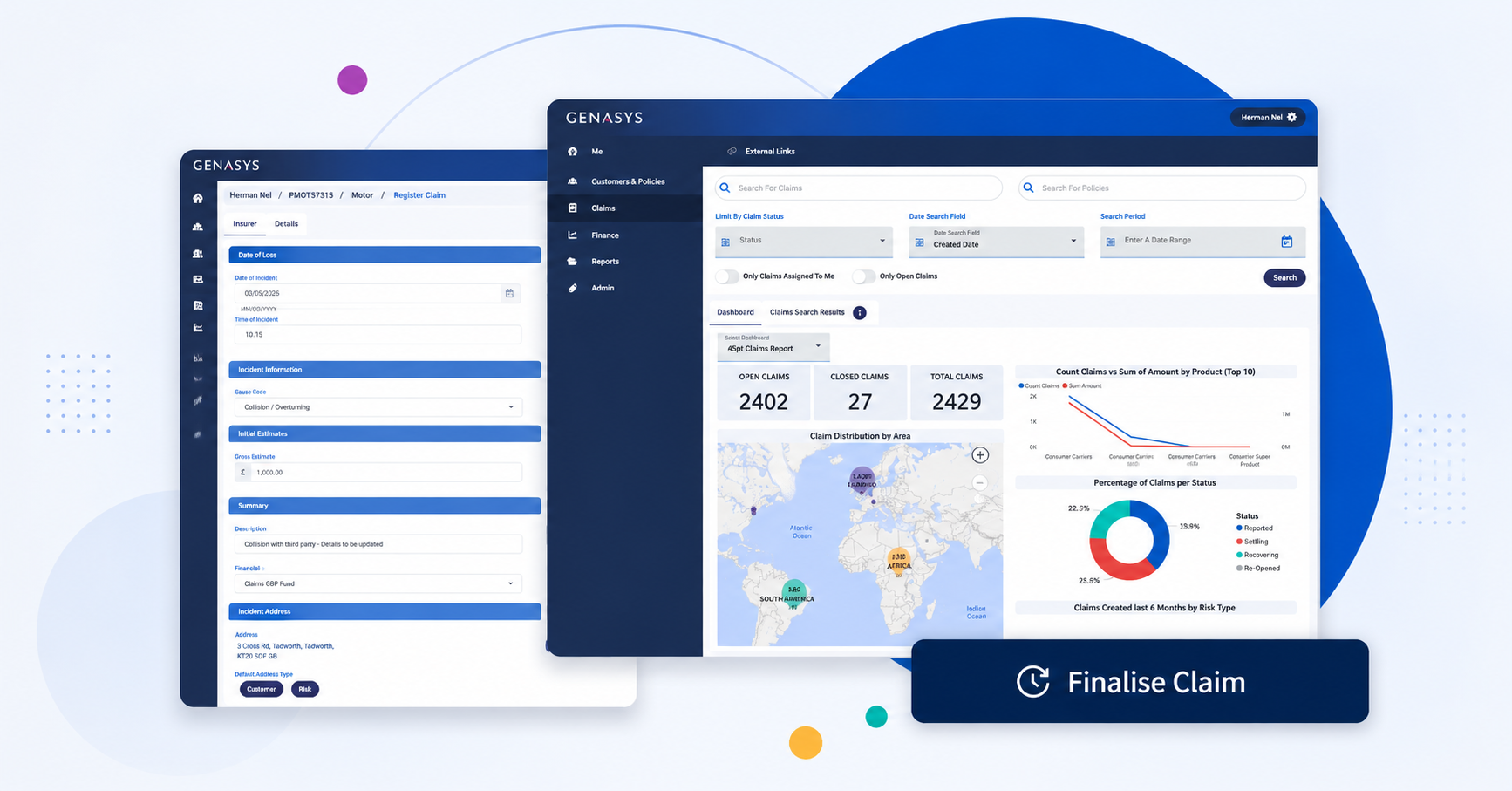
For an AI agent to quote a policy on behalf of a customer, it needs real-time access to rating engines, underwriting rules, product data and binding capability. If your policy administration system cannot expose these functions through modern APIs, you are invisible to the AI distribution layer. It does not matter how good your products are or how strong your relationships are. If your systems cannot participate, neither can you.
This is not a new problem. It is an old problem made urgent. BCG has reported that 74% of core insurance IT transformations fail to deliver planned results, often because organisations focus on technology without redesigning the underlying business processes.12 McKinsey’s research found that core system and policy administration platforms must now “re-architect for openness,” exposing APIs and adopting micro-service designs that enable integration with AI agents.11
The twelve apps waiting in WaniWani’s approval pipeline will each need carrier, MGA and broker partners who can deliver real-time, API-driven quotes. The window to become one of those partners is narrowing.
What AI Insurance Distribution Means for Brokers and MGAs
The temptation is to dismiss this as a personal lines problem. After all, quoting home insurance inside ChatGPT is not the same as placing a directors’ and officers’ programme or structuring a property treaty. That is true. But the direction of travel is clear, and the speed of change is accelerating.
J.P. Morgan outlined a scenario in which AI agents embedded in platforms like ChatGPT manage the full insurance journey for personal lines customers, increasing price transparency, raising churn and intensifying competition.7 At the same time, the bank acknowledged that leading brokers can adapt through digital agents, AI-enabled quoting engines and direct-to-consumer capabilities.
PwC’s Insurance 2030 outlook projects that as AI commoditises the lower end of the market, brokers will increasingly focus on higher-touch, multi-line commercial customers who need genuine advice and complex risk management. The role shifts from transactional sales to trusted adviser.13
For brokers using AI technology to enhance their operations, this shift creates an opportunity. AI for brokers is not about replacing human expertise. It is about freeing up capacity for the work that humans do best: understanding client needs, negotiating coverage and advocating at the point of claim.
The Scale of the Market Impact
The table below summarises the immediate market reaction on 9 and 10 February 2026.
Company | Decline (%) | Source |
Willis Towers Watson | 12.0% | Bloomberg |
Arthur J. Gallagher | 9.9% | Bloomberg |
Aon | 9.3% | Bloomberg |
Ryan Specialty | 8.0% | ZeroHedge |
Brown & Brown | 7.0% | ZeroHedge |
Marsh & McLennan | 7.0% | ZeroHedge |
S&P 500 Insurance Index | 3.9% | Bloomberg |
MarshBerry Composite | 8.9% | MarshBerry |
Sources: Bloomberg, 9 February 2026; MarshBerry, 11 February 2026; ZeroHedge, 11 February 2026.
Five Things the Winners Will Do Differently
The brokers, carriers and MGAs that come through this shift stronger will share a common set of characteristics. None of them require building a ChatGPT app. All of them require strategic clarity about technology infrastructure.
- Get API-ready. Can your systems deliver a real-time quote to a third-party platform today? If not, that is the first priority. Not because ChatGPT is coming for your book tomorrow, but because every emerging distribution channel requires this capability. Embedded insurance, partner integrations, comparison platforms and AI agents all depend on the same thing: open, real-time API access to your rating and binding engines.
- Own your specialism. AI apps are starting with commoditised personal lines for a reason. These are simple, high-volume, low-advice products. The more complex, relationship-driven and advice-led your book is, the more defensible it remains. But even specialist brokers need modern systems to compete on service speed and accuracy. Brokerage AI tools that automate submission processing, policy checking and client communications free up producers to focus on the work that justifies their commission.
- Think channel-agnostic. AI insurance distribution is just the latest in a series of new channels. The brokers who thrive will not bet on a single distribution model. They will operate on platforms that let them serve direct customers, comparison sites, embedded partners and AI agents from a single core system. That is not a technology nice-to-have. It is the strategic moat. McKinsey’s research confirms that insurers are “moving away from monolithic systems and toward modular, open environments that allow best-of-breed AI tools to interoperate.”11
- Invest in data quality. In an era of AI insurance distribution, AI agents will route business to the carriers and MGAs that can provide the fastest, most accurate quotes. Speed-to-quote becomes a competitive moat. That requires clean, structured, real-time data. McKinsey found that MGAs combining strong relationships with data ownership and advanced AI use “will differentiate themselves most sharply” and “use AI to strengthen, not replace, human underwriting judgment.”11
- Prepare your people. BCG’s research is unambiguous: AI success in insurance is not primarily a technology problem. It is an organisational one. The firm found that AI high performers are three times more likely than peers to have senior leaders who demonstrate ownership of and commitment to AI initiatives.14 The broker AI opportunity is real, but capturing it requires leadership that treats technology investment as a strategic priority rather than an IT project.
This is a signal of evolution
Insurance has survived every distribution shift in its history. From Lloyd’s coffee house to call centres to comparison websites to embedded insurance, each new channel was met with predictions of broker extinction. Each time, the industry adapted. Each time, the winners were those who modernised fastest.
AI insurance distribution is the next wave. The data from WaniWani suggests AI already drives close to 20% of new business for leading digital insurers, and that AI-sourced traffic converts at significantly higher rates than traditional search leads.6 That is not a threat to brokers. It is a growth channel for brokers who can access it.
The differentiator will not be who builds the best AI insurance distribution app. It will be who has the infrastructure to respond when an AI agent comes looking for a quote. Modern, API-first policy administration is the foundation that AI insurance distribution runs on. Without it, the best products, the deepest relationships and the sharpest underwriting teams in the market will remain invisible to the fastest-growing distribution channel in insurance.
The brokers and MGAs that treat this moment as a wake-up call rather than a death sentence will come out stronger. The ones with modern, flexible, API-first infrastructure will not just survive AI insurance distribution. They will be the ones the AI agents route business to.